Why Oil Changes Still Matter in Technician Training
Quick Takeaways
- Employers are prioritizing fundamental skills like oil changes to ensure technicians can handle complex vehicle systems later in their careers.
- The technician shortage is intensifying, with more jobs available than students, shifting the hiring dynamic toward shop selection and benefits.
- Career growth, mentorship, and clear pathways are key to retaining young technicians and encouraging long-term commitment to the industry.
- UTI integrates basic and advanced training, emphasizing electrical diagnostics and technical knowledge alongside foundational skills.
- Industry partnerships and manufacturer-specific training enhance student readiness and strengthen relationships between shops and educational institutions.
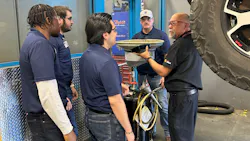
At the Universal Technical Institute campus in Mooresville, North Carolina, 35 dealerships, trucking companies, quick service operators, and recruiters recently lined the parking lot under blue skies for the school’s biannual career fair. In an unusual twist, the students had the upper hand.
Instead of trying to convince employers to hire them, many students were evaluating which employer offered the strongest long-term opportunity.
Across the country, dealerships, quick lube operators, and independent repair shops are all competing for the same thing—entry-level technicians who can contribute quickly. For the oil and lube industry, that competition makes one question especially important: Are new technicians truly prepared for the realities of the service bay?
At UTI, the answer starts with a surprising focus—oil changes.
Back to Basics
As vehicles become more advanced with ADAS systems, electrical diagnostics, and increasingly complex service requirements, employers might be expected to ask for more advanced technical training. Instead, many are asking schools to reinforce the fundamentals.
“They’ve asked for us to sort of go back to the basics, back to oil changes,” says Tony Frassetto, director of business alliances.
That feedback came directly from employers and advisory councils who know where most technician careers actually begin.
“The very least that they need to know is … to go out into the industry and do a perfect oil change,” Frassetto says.
For quick lube operators, that should sound familiar. Oil changes may be viewed as entry-level work, but they are also where technicians learn consistency, inspection habits, customer trust, and attention to detail.
Those fundamentals matter because a technician who cannot handle the basics will struggle with larger repairs later.
“If you skip the basics, you’ll mess up your diagnosis,” says instructor Charles Buchanan.
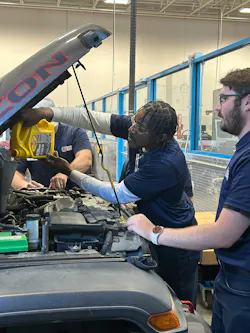
That mindset is changing how UTI trains students. Oil changes are not treated as routine work—they are part of the foundation.
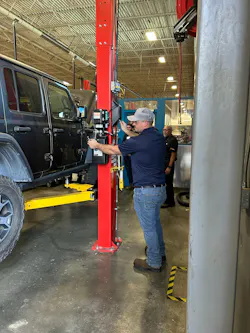
The Quick Lane is the Career Starting Point
Many graduates do not walk directly into advanced diagnostics or A tech roles. They begin in the quick lane.
“They’re not going to leave here at 20 years old and be turned loose in a garage,” says John Dodson, vice president of business alliances. “They’ll either go on to BMW or Mercedes, or they’ll go to a garage, and they’ll start out in the quick lane, and they’ll move their way up.”
That progression is important for the quick lube industry, as these establishments are often the first taste technicians get in the “real world.” It’s where they hone their skills and prove that they can handle the job. For shop owners, that means hiring should be about identifying those who have what it takes to advance.
Competitive Hiring Market
The demand for those entry-level technicians is intense—especially right now.
Campus director Robert Kessler puts it simply: “These employers, usually they come in and tell us, ‘I don’t need one. I need, like, three or four guys. Can you help us?’”
Dodson says the shortage continues to widen.
“There are three jobs available for every student,” he notes.
That realization has shifted the hiring dynamic. Shops are no longer simply choosing technicians—technicians are choosing shops instead.
Frassetto describes the mindset students bring into the biannual career fairs held at campuses like UTI-Mooresville.
“They can basically sit down with them and be like, ‘What are you gonna offer me?’”
That offer often includes more than hourly pay. Tuition reimbursement, tool allowances, moving stipends, and flexible scheduling are increasingly expected by graduates evaluating their options.
Selling a Career, Not Just a Job
For quick lube operators competing against dealerships and large franchise groups, attracting talent now requires more than posting an opening. One of the biggest challenges for quick lube operators is retention. Many students see those jobs as temporary, not as long-term careers.
Margie Decker, director of student and career services, says the best employers solve that by showing a clear future.
“I think showing a pathway so that they have a clear understanding (is important),” she says. “Most of our students are taking those jobs as part-time jobs right now, while they’re in school, they’re not thinking of them as long-term careers.”
But that pathway matters. Students want to see how they will transition into diagnostics, leadership, management, or even ownership.
“And when you have an organization that can build and incentivize those individuals to stay, whether they become an owner of a franchise or what they do with it, that’s the ticket,” Decker says.
Frassetto says mentorship is one of the most effective retention tools.
“Bring them in with a plan for growth, you know, put them under a master technician or someone who’s sort of like their mentor,” he says.
That support helps young technicians see the first job as the beginning of a career, not just a temporary stop.
More Than Just an Oil Change
“Right now, the more electrical, the better,” says Bobby Leatherman, education manager at UTI-Mooresville.
Even though skills such as electrical diagnostics are viewed as more valuable, there is still something to be said for learning “the basics” and performing well under pressure. Oil changes remain the first test of professionalism, discipline, and trust.
They are also becoming more technical. Changing oil today means understanding specifications, viscosities, and evolving manufacturer requirements. For lubricant brands and suppliers, that creates an opportunity to play a bigger role.
“All of our partners should be educators, too,” Kessler notes.
Helping technicians understand why a product matters—not just which one to use—builds stronger shops and ultimately better relationships with customers, who trust the information they are being given by confident, knowledgeable technicians.
The Next Generation
Student Isaac Hales may be the best example of what employers are looking for. He drives two hours each way to campus every day, working toward a future in performance and motorsports.
When asked what he is taking with him after graduation, his answer is immediate.
“Precision under pressure is the biggest thing that I’m taking away,” he says.
That mindset matters because the first job is rarely the destination.
For the oil change industry, the message from UTI is clear: The technician shortage will not be solved by simply graduating more students. It will be solved by developing technicians who can walk into a shop, master the basics, and keep growing.
And that still starts with getting the oil change right.
***
At a Glance
The Universal Technical Institute-Mooresville offers six core programs including: Automotive & EV Technology, Welding Technology, HVACR Technician, Electrical & Industrial Maintenance Technology, Electrical, Electronics, & Industrial Technology, Electrical, and Robotics & Automation Technology. Plus, Mooresville offers NASCAR-endorsed training and manufacturer-specific advanced training options for automotive graduates, including Ford FACT and Mopar TEC.
The team manages 90-plus brand relationships across UTI campuses nationwide including brands like Pennzoil, Harley-Davidson, Peterbilt, Kawasaki, Ford, Honda, Jeep, GMC, Mercedes, and Suzuki. The focus is on helping companies engage, recruit, and/or support the next generation of aspiring technicians through product/training-aid inclusion, digital promotion (UTI Go), campus presence/branding, and on-campus engagement.
UTI operates 16 campuses across 10 states with additional new campuses planned, such as UTI–Salt Lake City in West Jordan, Utah, which is slated for opening in 2027.
Source: John Dodson, vice president of business alliances, UTI-Mooresville
About the Author
 Christine Schaffran
Christine Schaffran
Christine Schaffran is the Editor-in-Chief for Ratchet+Wrench magazine at Endeavor B2B. She is an award-winning journalist, having covered both commercial and industry magazines and newspapers during her career. She previously served as Editor-in-Chief for another publisher for 17 years prior to joining Endeavor. When she's not spending time with her husband and son, you'll find her in the kitchen experimenting with new recipes and delicious dishes to try.