PAMA Goes to Washington: REPAIR Act Takes Center Stage for Fly-In
Quick Takeaways
- PAMA's annual Fly-In connects auto industry leaders with lawmakers to influence legislation and address key industry issues.
- The organization actively promotes the passage of the REPAIR Act to protect auto service providers' rights and interests.
- This year's meetings with policymakers focused on environmental concerns like PFAs and safety regulations such as OSHA heat standards.
- High-profile OEM visits and presidential remarks highlight the industry's importance and ongoing legislative efforts.
- PAMA encourages industry participation through quarterly meetings and advocacy to strengthen legislative impact.
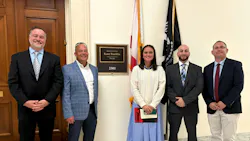
Around two years ago, the Preventative Automotive Maintenance Association began hosting its Advocacy Fly-In in Washington D.C., bringing executives from across the auto service industry to Capitol Hill to meet with lawmakers and discuss the issues impacting our industry.
This past May, PAMA held its fourth fly-in. Justin Cialella, president and CEO of Victory Lane and chair of PAMA’s Government Affairs Committee, shares with NOLN what the most recent trip looked like and what the organization’s current focus is for legislative efforts in the auto maintenance industry.
Pushing the REPAIR Act Toward the Finish Line
The D.C. trips were launched in an effort to broaden the organization’s legislative approach. Working with a group of policy advisors in D.C., PAMA arranges meetings between representatives on Capitol Hill and its members to discuss issues impacting the auto service industry.
PAMA brings a team of executives from across the industry on the fly-in, with participants ranging from individual shop operators to some of the nation’s largest preventative maintenance chains.
“These are folks that are pretty familiar with the issues, and usually at a senior level within their organizations,” explains Cialella. “We try to get a good cross-section. I think we were represented in almost all 50 states with just the folks that we had there.”
The most recent fly-in this past May led to 27 meetings being planned with representatives. Members spent a full day on Capitol Hill having discussions with lawmakers, splitting apart to take on meetings individually or in small groups.
“The whole idea behind the legislative fly-in is to exercise our right to petition our own government, and so that's what we do,” says Cialella.
This year, the REPAIR Act took center stage, with PAMA working to help it pass and retain language that would protect auto service providers. Members met with several lawmakers involved with the REPAIR Act, including:
- Rep. Neal Dunn (R-Fla.), the main sponsor and author of the bill in the House of Representatives
- Sen. Josh Hawley (R-Mo.)
- Sen. Ben Ray Luján (D-N.M.)
- Rep. Marie Gluesenkamp Perez (D-Wash.), an especially vocal supporter of the REPAIR Act
Other issues tackled at the fly-in included the topic of per- and polyfluoroalkyl substances, or PFAs, which can be found in several automotive applications such as motor oil and its additives.
Though auto service providers are not generators of the chemical, they receive it and handle it, and consequently could be exposed to what's called Superfund liability, which is meant to hold parties responsible for cleaning up hazardous sites. For example, with motor oil, current EPA guidelines do not consider it to be hazardous waste, meaning it has an entirely different criteria for disposal, and auto shops are protected from any spills that happen after the oil is reused in the supply chain.
“If there is a spill, or any kind of contamination issues, we usually enjoy what's called a service station exemption as a passive receiver. And therefore, we can't be held liable for the extensive environmental cleanup, which would bankrupt most operators,” explains Cialella. “So PFAs falls into this sort of catch-22 category, where it has not been designated yet, and it is definitely a hazardous chemical, something that needs to be dealt with, and something that Congress needs to figure out.”
PAMA also set some time aside to address OSHA regulations related to heat-related illness. While there have been some efforts for standards that protect workers in high temps, PAMA wants to see rules that are more clear on what the expectation on businesses will be.
While there has been some action on the state level, PAMA is pushing for nationwide standards that all shops can begin to work towards.
“The Department of Labor/OSHA has not yet addressed that in a comprehensive way, and because the feds aren't addressing it, the states are addressing it—and then you have this patchwork of different regulations in every other state,” tells Cialella. “So, we're trying to get some consistency from the federal level, and guidance that makes sense for all operators.”
The Aftermath: Reactions From OEMs
PAMA’s visit seemed to have made an impact. Just after the fly-in concluded, automotive OEMs came to D.C., including Jim Farley from Ford, Mary Barra from GM, and Sen. Bernie Moreno (R-Ohio), who met with President Donald Trump.
“The president made a stunning statement during that meeting—somewhat unpredictable, but certainly helpful for us—which is that he has a friend who's an auto mechanic and made a lot of money repairing vehicles, and so why wouldn't you want people to be able to repair their own vehicles?” shares Cialella. “The folks on the other side of this, the Jim Farleys of the world and the Mary Barras of the world, were stumbling all over themselves to try to answer that question, which they don’t have a good answer to.”
PAMA still has much work to do in the way of legislation that helps the auto service industry. For those wanting to make their own voices heard, PAMA members host quarterly meetings for its Government Affairs Committee. With their policy advisors, they discuss what initiatives they’ve been working on over the past quarter; on federal, state, and local level.
“Get involved with PAMA, get involved with the Government Affairs Committee—there's a lot of work to do here, and we need as many people as we can to fight the good fight,” says Cialella.
About the Author
 Kacey Frederick
Kacey Frederick
Assistant Editor
Kacey Frederick joined as the assistant editor of NOLN in 2023 after graduating from the University of Arkansas at Fort Smith with a bachelor’s in English and a minor in philosophy. The grandchild of a former motorcycle repair shop owner, he’s undergone many trials and tribulations with vehicles. Now the proud owner of a reliable 2011 Toyota Camry, he works to represent those in the service industry that keep him and so many others safely rolling on.