‘Red Zone’ for Oil Supply Shortage Looms, Agency Director Warns
The international oil market could be on the verge of entering a “red zone” by July or August, as the summer driving season ramps up and oil exports remain constrained as a result of the ongoing conflict in the Middle East, International Energy Agency Executive Director Faith Birol said in a speech delivered Thursday at Chatham House in London.
A report released on Friday by the Energy Information Administration noted that during the first quarter of the year, crude oil and petroleum liquids moved through the Strait of Hormuz fell to just 14.6 million barrels per day (10.7 million barrels of crude oil, 3.9 million in petroleum liquids), down from 20.7 million barrels in the fourth quarter in 2025.
The IEA is currently engaging in a coordinated strategic reserve release of 2.5 million to 3 million barrels per day to alleviate pressure being caused by the closure of the Strait of Hormuz, but it isn’t enough, Birol said. An analysis by Reuters estimates that the reserve’s final supplies will be released by early August.
"The single most important solution is fully and unconditional opening of the Strait of Hormuz," Birol said, according to Reuters.
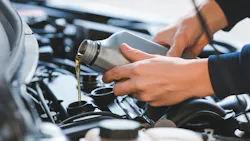
At the center of the shortage is the 44% of base oil used in motor oil known as Group III, which comes from three producers in the Persian Gulf who have been derailed by the Strait of Hormuz closure.
In the meantime, industry executives are bracing for turbulence.
“We’re looking at shortages — I have no doubt in my mind,” Holly Alfano, CEO of the Independent Lubricant Manufacturers Association (ILMA), an industry trade group, told CNN in a report published on Tuesday. “It’s a big mess—and it’s not going to be resolved quickly. It could take a year or so before we see any real relief.”
Low-viscosity engine oils, including 0W-20, 0W-16, and 0W-8, could have an “imminent shortage,” according to the ILMA. Among modern cars, 0W-20 accounts for about one-third of total motor oil demand for passenger cars, according to Petroleum Trends International.
PTI President and Founder Tom Glenn, who also serves as the publisher of JobbersWorld, noted to CNN that while motor oil distributors would increase prices for distributors by 70 to 80 cents per gallon in “a normal year,” some increases from producers now are approaching $5 per gallon or more.
About the Author

Tom Valentino
Editor
Tom Valentino is the editor of National Oil and Lube News. A graduate of Ohio University, he has more than two decades of experience in newspapers, public relations and trade magazines, covering everything from high school sports to behavioral health care. Tom’s first vehicle was a 1990 Mazda 626, which he used to deliver pizzas in the summer after graduating high school. Today, he drives a 2019 Jeep Compass, which usually has a trunk full of his daughter’s sports gear. In his spare time, Tom is an avid Cleveland sports fan and a volunteer youth sports coach.
Don't miss Tom Valentino's next article. Sign up for NOLN's Quick Lube Report and This Month in NOLN newsletters.