Supply Chain Disruptions Force Automakers to Explore New Lubricant Suppliers
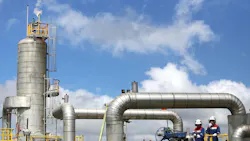
A new report from Financial Times shared that automakers are seeking out alternative sources for motor oil, reaching the end of their supply.
Since the war in the Middle East, the supply of high-quality base oils used for engine oil has dwindled, and automakers are now reaching the end.
As a solution to this, multiple major automakers are exploring alternative supplies of motor oil, something that previously would have not been considered, but may now be necessary.
“Before, 100% of the original equipment manufacturers would be reluctant to accept any other lubricants,” a manager at a major European lubricants producer shared with Financial Times. “But these days some of them are desperate, and if the market situation continues like this, they might be forced to be more flexible on the specifications to keep feeding the market.”
Stellantis and Toyota have both confirmed they’ve secured alternative supplies. Volkswagen has also secured the supplies it needs for now, while looking at other options that still comply with its standards.
The impact is already being felt in the quick lube field, even among large networks like Valvoline. In a recent earnings call, President and CEO Lori Flees acknowledged the war’s effect on Group III base oil.
However, Flees also said that Valvoline’s scale and strong supplier relationship have helped the company maintain reliable access. Management expressed confidence in the company’s supply position both now and in the near term.
Through consumer pricing and operational discipline, the company plans to manage the cost dynamic through. She added that both company-operated shops and franchisees took pricing actions in the third quarter.
“Based on the current forecasts, we expect finished lubricant costs could be approximately 60% above where they were in March,” Flees said. “While that sounds significant, let me clarify: That means we expect a total increase of approximately $5 to $7 per oil change, depending on the lubricant type, relative to the March period.”
Despite automakers having alternative supplies right now, the situation is still precarious, Financial Times noted. The number of suppliers has decreased due to consolidation within the industry, and alternative suppliers like South Korea have been struggling to obtain the crude supplies they typically have.
“Alternative suppliers also have limited volumes, and any renewed shipping disruption, refinery outage or other supply shock could rapidly worsen the situation,” said Holly Alfano, chief executive of the Independent Lubricant Manufacturers Association. “The industry continues to operate with little margin for error.”