Quick Takeaways
- People are the top priority; building strong leadership and maintaining service quality are crucial during expansion.
- Selecting prime real estate with good visibility and access can significantly impact long-term success.
- Acquiring existing locations can save costs and provide immediate operational history, but employee loyalty must be managed carefully.
- Developing a clear growth strategy, including setting goals and understanding market dynamics, helps prevent overextension.
- Investing in signage, staff training, and administrative support enhances brand visibility and operational efficiency.
Whether they’re a successful owner of a single independent quick lube shop or a budding franchisee just getting started with a major national chain, it’s not uncommon for quick lube operators to have their sights set on their next location—and beyond.
But to make that jump from one facility to five—or from five to exponentially more—quick lube operators must be strategic in plotting their growth, or they could face significant pains, regardless of their success with their current operations.
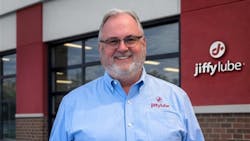
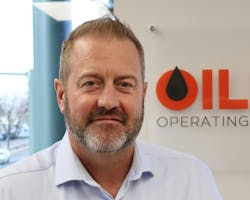
When it comes to doing expansion right, Ron Morrow Jr., president of Oilex Operating, and Steve Isom, executive vice president of Stonebriar Auto Services, are among the best in the fast oil change industry.
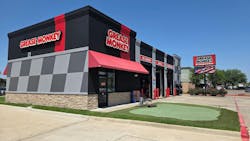
Morrow oversees a network of 35 Grease Monkey stores in Colorado, Arizona, Texas, and Montana. (This includes five recently acquired MasterLube shops in Billings, Montana, which are planned to be rebranded as "MasterLube Powered by Grease Monkey" later this year.)
NOLN recently caught up with Morrow and Isom to learn how they grew their respective networks. The two business leaders also shared wisdom for operators who are aspiring to become the industry’s next titan.
Building a Portfolio
Morrow entered the business by following in the footsteps of his father, Ron Sr., who at one time was the largest Grease Monkey franchisee in the U.S. The elder Morrow sold off his business in 2016, at which time Ron Morrow Jr. went to work for FullSpeed Automotive. In 2021, Morrow left FullSpeed to purchase his first Grease Monkey franchise in Fort Collins, Colorado.
Morrow held talks with potential investors, and in June 2023, he purchased 14 stores in Colorado. With that acquisition, Oilex was officially formed, launching with 15 shops total. That number quickly grew, however, more than doubling over 2 ½ years to the current total of 35 locations.
Since 2020, Stonebriar has opened about 22 locations per year, with as many as 29 in a single year and a low of 17. The onset of the COVID-19 pandemic did not deter Stonebriar from its expansion plans, Isom says.
“A typical store pipeline could be around 15 months, so we were committed. You don’t want to sit on partially completed stores,” Isom says. “We wanted to be sensitive to our team. Everybody was new, but a couple of my key right-hand guys who had been with me in previous jobs. So, we said, hey, we want everyone to do what they’re comfortable with. But we had a scrappy, can-do attitude team, which is what we tried to put together.”
In the face of uncertainty around the pandemic, that group opened three Jiffy Lube locations on June 30, 2020, one in northern Wisconsin, one south of Milwaukee, and a third in Fort Smith, Arkansas.
Winning with People
Ask Morrow and Isom about the keys to growing their business, and without hesitation, both will tell you people are their top priority.
“If you’re going from one to two stores or the rapid growth we’ve had, the biggest challenge in all of those is keeping the quality of your service, which is directly tied to the quality of your people,” Isom says. “You don’t want that level of service and the type of leadership that you deliver to be diluted by the number of locations and getting spread out. You’ve really got to put a lot of forethought in how to keep those standards the same.”
For Isom, that meant starting by assembling a team of district and regional managers who could provide strong leadership in every geographic area in which Stonebriar would operate.
“That was really important at the beginning, and it still is today,” he says. “Your commitment to service and your standards with employees can’t waver just because you’re growing and that’s hard.”
Isom keeps an eye on his stores’ online reviews and internal surveys to ensure Stonebriar’s facilities are staying on track.
“You don’t want to have your store-level team starting to think that nobody’s paying that close of attention and create the temptation to not be as motivated to give the best possible service to customers,” says Isom.
As Morrow explains how Oilex went from a single Grease Monkey location to nearly three dozen in five years, the throughline is similar to that of Stonebriar: an emphasis on being surrounded by the right people.
“It's always the people and if they're ready,” he says. “I'm just one person, and obviously one person can't do it all. So, when you come out of running one shop, you control a lot of things—your HR, your AR. You’re the operator, you’re the trainer—everything. There has to be a concept where you lose some of that control or give up some of that to people you trust.
“The hurdle is always to make sure that those pieces are in place with people you trust. It's all about the people, all the way down to the shop with the people greeting the customer, talking to those customers. They truly do control most of the outcome of whatever is going to happen with that company.”
All 35 shops operated by Oilex are existing quick lubes that were bought out, including some shut-down buildings, which were then remodeled and rebranded as Grease Monkey facilities.
When scouting out potential acquisitions, Morrow again looks to the people involved. Having a good team in place makes a shop a much more attractive to a potential buyer, he says. However, Morrow cautions that in many cases, those good employees will be fiercely loyal to their shop’s previous owner—something a new owner should be cognizant of when taking on a new shop.
“I appreciate and respect that loyalty,” Morrow says. “So, the challenge would be on us. What I always tell people when we’re going in is, ‘You’re employed tomorrow. The only thing I’m asking you to do is give me a chance. If you don’t like it, that’s fine. But give me a chance to show you what we’re about and see if we can make it happen.’ We go from there. Is (our retention rate) 100%? No, but we do a pretty good job on that side of it.”
Mapping Out a Strategy
When considering expansion, Isom says operators should first determine their overall goals. For some shop owners, expansion is a chance to grow a business for themselves. For others, it is a way to create opportunities for those around them.
“If you’re an owner who’s hands-on, but you’ve developed a great store manager who would love to run his own shop, you’d like to expand and maybe give a piece of ownership to this person, and make it a win-win,” Isom says.
Once the decision has been made to move forward with expansion, Isom says operators should prioritize prime real estate. A quick lube shop needs great visibility and easy access. If a driver spots a shop while they’re on the road, but decides it’s difficult to access, they’ll move on and potential business is lost.
“It’s sad for those of us that live and breathe this, but that location is critically important,” Isom says. “If you’re looking at a site that is $800,000 for real estate and one that is $650,000, that’s a big temptation to go a little cheaper. But if it has better access, better visibility, better traffic, it’s going to pay off over the lifetime of that location. Your decision on location is a decision that will stick with you forever.”
Morrow says he is not opposed to new construction—he and his father built several new stores together—but he finds there are inherent advantages to acquiring existing properties.
“You can avoid the construction costs. You can avoid the land purchases if you're finding existing units,” he says. “From day one, you're open, right? You don't have to start from (square one). You have a little bit of history with what the shop's done.
“Now, you can find some really good real estate and a really good growth area, and have a successful store by building it. There’s just a significant cost that comes along with that.”
For shop operators with one location who are weighing potential expansion, Morrow cautions that a network of five shops can be difficult to handle if the facilities are spread too far apart.
“But if you have the right people, you can manage that,” he adds.
Along those lines, Morrow recommends that operators be prepared to add administrative staff, including those who can handle payroll and other human resources-related tasks. Shop owners should also be prepared to withstand staff turnover.
“I think it’s important to understand the possibility of losing a key person along the way and (having) a plan in place,” he says. “You can lose a key manager, and that can change things really quickly.”
Isom recommends being thorough in leadership training. This includes having refined hiring processes for attracting top talent, paying good wages, and bringing future location managers in early to work at your existing location to get them into the flow of your operations.
“That’s an investment that will pay huge dividends because you’re really getting to know them,” Isom says.
Besides staffing and real estate, there is one more area where Isom recommends enterprising operators invest as they look to expand: signage.
“I really want to be flashing our name because we’re in a low-interest category. You’ve got to make it jump out,” he says. “Typically, what I do is find out what the local ordinance allows, and I max it. I don’t know if I’ve ever opened a store where I’ve got a square foot of signage that I didn’t use. If you say I can have this much, that’s how much I want to use to ensure people can’t miss me.”
Brace for Impact
Isom says that no matter how successful an operator’s first shop is, it might take some time for additional locations to flourish, even within the same market.
“You have to remember when you open a new location, all your customers before you open were going somewhere else. They had a choice, right?” Isom says. “You just don’t know how convenient it was and how far they had to go. … If they’re going somewhere that they’ve got some comfort, ‘I feel like I trust these people, and they do a pretty good job,’ it’s hard to pull them away.”
As operators look to establish new locations, they should be prepared to have access to capital or cash to sustain their business in the early months after opening to cover unexpected expenses, less sales volume, and potentially higher rent costs. To be able to sustain through lean months, it can be tempting to reduce the quality of products sold or cut labor, but both of those decisions will hurt in the long run, Isom says.
Even in slow times, new shops will occasionally see a rush of customers. If a shop is running short-staffed, it could create a bad first impression and cause those customers to go elsewhere next time, Isom explains.
“With a new store, every customer is so much more precious because they’re new,” he says.
Morrow adds there is one last potential pitfall for operators eying expansion to be weary of: trying to take on too much, too quickly. This was a lesson Morrow says he learned the hard way while working for his father.
“Sometimes, you just go too fast, not really grasping what it looks like,” he says. “Opportunities come up, and they come up too quick, and you want to react to it. Things can happen fast.”
About the Author
 Tom Valentino
Tom Valentino
Editor
Tom Valentino is the editor of National Oil and Lube News. A graduate of Ohio University, he has more than two decades of experience in newspapers, public relations and trade magazines, covering everything from high school sports to behavioral health care. Tom’s first vehicle was a 1990 Mazda 626, which he used to deliver pizzas in the summer after graduating high school. Today, he drives a 2019 Jeep Compass, which usually has a trunk full of his daughter’s sports gear. In his spare time, Tom is an avid Cleveland sports fan and a volunteer youth sports coach.
Don't miss Tom Valentino's next article. Sign up for NOLN's Quick Lube Report and This Month in NOLN newsletters.