NOLN at 40 | Fast, Familiar, Forward: How Quick Lube Shops Modernized Without Slowing Down
Key Highlights
- Jiffy Lube and Take 5 have maintained core design elements and a focus on quick, efficient service since their inception.
- Both companies have expanded their service bays and integrated advanced safety protocols and technology, such as VIN scanners and AI cameras, to enhance safety and customer experience.
- Jiffy Lube has evolved to include multicare services like brake and tire maintenance, reflecting vehicle technological advancements and longer customer vehicle retention.
- Take 5 emphasizes simplicity and authenticity, investing selectively in technology that directly improves guest experience and operational efficiency.
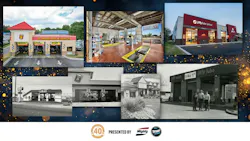
At its core, the quick lube industry has remained fairly consistent in how shops are designed.
Whether pulling into a franchise location of a large national chain or a family-owned independent business, drivers can usually expect to see bays with either lifts or pits, large roll-up doors, and a staff of lube technicians ready to change oil and perform quick vehicle maintenance services.
Jiffy Lube is credited as the nation’s first major fast lube chain, dating back to 1979. Take 5, meanwhile, is recognized as the brand that launched the first stay-in-your-car quick lube model when it began in 1984.
Four decades later, both companies are still heavyweights in the industry. NOLN recently caught up with representatives from both Jiffy Lube and Take 5 to understand how their shops have evolved over the years—both in terms of what has remained consistent since they first opened their doors and what modern innovations have kept them at the forefront of the field.
***
Four decades ago, Jiffy Lube service centers were designed with three goals in mind: accommodate efficient vehicle flow, technician safety, and service consistency, says Jiffy Lube International President and CEO Mauricio Quezada. Shops were built with a minimum of two service bays. Customers exited their vehicles upon arrival and waited in a designated guest area while technicians performed service.
“The layout emphasized quick access to under-vehicle service areas (with a full basement design) and standardized equipment placement to support fast, repeatable maintenance,” says Quezada.
In Take 5’s early years, its shops were focused mostly on very simplistic car maintenance services.
“There was not a lot of room, just a couple of roll-up doors. Get cars in, get cars out,” says Amy Hine, Take 5 vice president of operational excellence. “But they did have a few small things, like equipment to do tires. Some (locations) had basements where they could store bulk oil and pull them up, almost like a gas pump. But it was a very simplistic layout because they wanted to focus on what if we let our customers just stay in their car while they had these basic services.
“There was not a lot of room for inventory, just a box with a little bit of an office, and everything else happened on the floor, like an open kitchen.”
Evolving with Growth
As Take 5 began to expand, the company stuck to a consistent layout for its new locations as much as possible. Variances in most cases came from mergers and acquisitions of independent shops, some of which were full-service maintenance facilities that wanted to sell, Hine says.
Lifts were removed from any shops that had them at the time of acquisition, as Take 5 focused on its stay-in-your-car service model, which necessitated vehicles staying on the ground.
Take 5 ramped up its expansion in the mid-1990s. At that point, the company decided to go all-in on the stay-in-your-car, 10-minute oil change model it pioneered. This meant getting rid of tire services and other longer tasks.
“So, about 1996, that’s when we started to say that this is what we’re focused on, just the 10-minute, stay-in-your-car oil change. This is all we’re going to do,” Hine says. “We’re going to design our shops around that. We’re going to build around that. Any services we add will just be something we can also do, but not impact that fast service and not make you get out of the car.”
For Jiffy Lube, the drive-through bay configuration and customer lounge with observational windows were standard design features across all locations.
“We have always had the belief that we want our customers to see how we are taking care of their vehicles,” Quezada says.
Bay count is one aspects of Take 5’s business model that has been tinkered with.
“If you have smaller area and you want to do two bays, we find that that does impede traffic a lot,” says Hine. “Single bays are something we really never wanted to go forward with. The double bay we have in some places, but only where we have to.
“We’ve also played with the idea of four, five, and six bays. … We’ve found that once you get past the fourth bay, it’s really hard to manage that. So, we’ve found the sweet spot is three bays, which is what we stick to, unless there are real estate constraints that we have to consider.”
The three-bay model has also allowed Take 5 to plan its labor more efficiently, Hine adds.
There have been a number of adjustments made to the standard Jiffy Lube facility. Over the years, locations have been expanded to multi-bay service layouts based on car count demand and expanded service offerings, as well as trying to adapt to changing consumer and vehicle technologies, says Quezada.
The increase in service bays has, in turn, led to increases in labor costs to accommodate additional staff.
“As vehicles have become more complex, a higher-level skill set is required of service center technicians, which is also reflected in today’s labor costs,” says Quezada, noting that the company has provided ongoing learning opportunities for employees through online training courses, coaching, instructor-led courses, and computer-based simulation.
Quezada says that changes to vehicles—technological advancements, more high-performing parts and components—and changing customers have driven other developments how Jiffy Lube shops operate. In 2018, the company launched its “Multicare” model, incorporating brake, tire, and other wear-related maintenance services as drivers held onto their vehicles longer.
Quezada notes one other area in which Jiffy Lube shops have evolved from the company’s early days: increased safety protocols.
“When Jiffy Lube launched, stores did not have safety nets covering the pit area,” he says. “Today, safety is a top priority with numerous processes and procedures in place to help ensure the safety of service center employees and customers.”
Strategic Investments in Technology
Technological improvements at Jiffy Lube locations have been implemented with the goal of enhancing the experiences of both customers and employees.
“From VIN scanners, ID/DL scanners, mobile bay tablets, and mobile payment processing, continuous innovation and use of technology is critical,” Quezada says. “Additionally, Jiffy Lube offers an instant online estimate tool to help drivers research services and receive a price estimate for their upcoming visit.”
“Technology has clearly evolved—from a manual process at checkout, requiring managers to manually handwrite invoices and use a cash register tape to today’s current POS and payment systems.”
Take 5 has taken a measured approach to new technology, sticking with what works until it doesn’t, Hine says.
“Sometimes, what worked then probably still works now, like a good old wrench,” Hine says. “What I like is we don’t always chase what is the shiny penny that’s new. You don’t see us with digital menu boards at this time. You don’t see us trying to throw every piece of technology and saying how this is going to help. One, for the technicians in our shop, we want to keep it (uncomplicated). This is what we want them to know and how to service the guest. Our guest experience and our customers are our No. 1 priority. We don’t need to be flashy. We need to be authentic.”
On the flip side, though, Take 5 will invest in new tech if it will help to address a very specific problem in the shop, Hine adds. One example is the installation of bulk oil tank monitors to help with tracking usage and planning overall inventory. Take 5 has also found new uses for previously installed equipment, Hine says.
“The one that we’re really into right now is using all of our cameras in the system, our loss prevention cameras that we’d had in there before,” Hine says. “We have converted them into AI cameras and are using that from a technology perspective to understand whether we are giving the optimal guest experience.”
This includes tracking wait times, bay times, how many cars are driving off, whether customers are being promptly greeted with a smile and a water, and whether managers are visiting vehicles at the end of each service.
“But our overall goal is if it doesn’t support the guest experience and if it doesn’t support efficiency, then it’s probably not something we need to do right now,” Hine says.
***
The NOLN 40th Anniversary is presented by Mighty Auto Parts and Solid Start/True Brand.
About the Author
 Tom Valentino
Tom Valentino
Editor
Tom Valentino is the editor of National Oil and Lube News. A graduate of Ohio University, he has more than two decades of experience in newspapers, public relations and trade magazines, covering everything from high school sports to behavioral health care. Tom’s first vehicle was a 1990 Mazda 626, which he used to deliver pizzas in the summer after graduating high school. Today, he drives a 2019 Jeep Compass, which usually has a trunk full of his daughter’s sports gear. In his spare time, Tom is an avid Cleveland sports fan and a volunteer youth sports coach.
Don't miss Tom Valentino's next article. Sign up for NOLN's Quick Lube Report and This Month in NOLN newsletters.