Beyond the Sale: Why Strong Vendor Partnerships Give Quick Lubes a Competitive Edge
Quick Takeaways
- Effective vendor partnerships involve understanding the specific needs and challenges of quick lube shops, including inventory, training, and service offerings.
- Regular communication and data sharing enable suppliers to provide tailored solutions that help shops grow and adapt to industry shifts.
- Visual aids and demonstrations are powerful tools for convincing customers to adopt new services and products, increasing sales and customer satisfaction.
- Transforming supplier relationships into strategic partnerships involves scheduled reviews, inventory optimization, and shared industry insights.
- Supporting quick lube operators with timely information and tailored solutions helps them expand services, retain customers, and boost profitability.
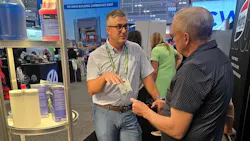
Recently, Matt Shaw visited a quick lube, and what he found left him shaking his head.
“I went in and stood in line and waited and watched the people. It was so disorganized and dysfunctional,” he says.
Shaw is the vice president of sales for Mighty Auto Parts, a role in which he leads and trains a nationwide sales organization. Mighty operates a network of 94 franchises, providing products, training for service advisors and technicians, and incentive programs for aftermarket automotive shops.
It’s no surprise, then, that Shaw’s views on aftermarket automotive shops are formed with a more discerning eye than that of the everyday guest.
But for Shaw and Mighty, such situations aren’t pain points as much as opportunities. Their role—as well as the role of other suppliers and distributors who serve the quick lube industry—is as much about strategy now as it is about keeping parts and products stocked.
“Communication is critical and, from the vendor side, we have to be a partner and we have to understand their business. We have to understand the challenges they're facing,” Shaw says. "It's different from business to business. So, you have to identify what their opportunities are inside there and help them resolve that.
“Maybe they don't have the proper inventory. Maybe their people aren't trained, (or) they don't have the tools or they don't have the exact parts they need or they've never tried to do preventative maintenance chemicals before because they're scared of that. It comes down to giving them the right solution for what they need and communicating it very effectively and lightening the load.”
Jeff Smith, the vice president of key accounts for Service Champ, offers a similar perspective. Smith, who also runs the company’s Canadian Division, Complete Lube Supply, started in the automotive industry in 1987, and he has worked for various organizations throughout his career, with roles in service, parts, sales, and operations.
In his current role, Smith oversees a team of key account managers and national account managers. The clients with whom his team works include large corporate entities with more than 1,000 locations, as well as multi-shop operators with a handful of locations that are part of larger groups.
When asked about the biggest challenges he sees quick lube operators facing these days, Smith is contemplative.
“That’s a great question because the entire industry, everything is changing so rapidly,” he says.
In some cases, Smith says he has seen changes to the industry hit different regions at different times—what was a shift for one part of the country three years ago is today’s challenge in another locale.
There is one consistent truth from coast to coast, though, Smith adds.
“Everybody that does any kind of auto repair wants as much of the customer’s wallet as they can get,” he says. “So, where it used to be, for example, that you went to the dealership to get your service work done as far as warranty stuff and you went to this segment to get this done, now everybody is trying to get a piece of the pie.
“Quick lube operators, the folks that can react the quickest and keep the consumer in the shop for more services, they’re the ones that are growing by leaps and bounds.”
Fostering that growth is a key part of the job for Service Champ’s accounts team, Smith says. Besides supplying parts and products, good vendor partners can also serve as eyes and ears across the industry.
“The advantage that somebody in my position or somebody on my team has is we’re seeing these macro changes across the board,” Smith explains. If we can sit down with quick lube operators and say, ‘hey, we see you’re not doing this service,’ or ‘you’re not doing this, but in other parts of the country, other folks are doing this—same size company you are, same size car count. They’re doing it, and this is the result they’re seeing.’
“We can do that because we’ve got all these touch points with different customers across the entire country, so we’ve got a good database, and we can pass that information along. (Without getting into) the specifics, obviously, the trends of what’s working and what’s not working, (we) pass it along and help the quick lube operator make an informed decision.”
Smith shares an example of this working relationship in action. Recently, a Service Champ client was strictly in the business of quick lube, wipers, oil changes, and cabin and air filters. After discussions with Service Champ, the shop added the service of pouring a select group of chemical treatments.
“Within six or eight months, they could see a 20% to 25% change in their business,” Smith says. “Their ticket averages are up, customers are coming back for the product over and over again. When the customer returns, it’s not just to get their oil changed. They want that chemical treatment that the supplier recommended last time. So, it becomes almost not even an add-on sale; it’s something the customer expects this time.”
Visual aids are a powerful selling tool for advisors, Shaw adds.
“If you can show somebody say a headlight restoration and say, ‘Here’s a restoration with one headlight done and one not done,’ it's super powerful,” Shaw says. “Just like the cabin air filter. If I've got a dirty one next to a brand new one because you stock the product, it's a very powerful representation, and people go, ‘Well, yeah, I want that brand new one right there. I want the shiny one. I don't want the nasty one.’ Visual aids are very powerful.”

“Quick lube operators, the folks that can react the quickest and keep the consumer in the shop for more services, they’re the ones that are growing by leaps and bounds.”
Jeff Smith
A Full-Fledged Partnership
Those discussions between supplier and quick lube shop are one of the most significant areas of change that Smith says he has observed throughout his career. Decades ago, a supplier was where you bought your parts or supplies from.
“Now as a distributor—I don’t even consider us a distributor, but more of a business partner,” he says. “One of the cool things we do is schedule quarterly business reviews with the quick lube operator. We sit down and say, ‘This is your business. This is what you’ve done this quarter or every six months’ or whatever timing the customer wants. But we can use that data and overlay it to what I said before, as ‘we’re seeing trends elsewhere or right down the road from you of this is what you could be missing out on.’
“So, we’ve turned into more than a supplier—somebody who’s just doing a service and shipping stuff out and taking the quick lube operator’s money to (now) being a business partner with them because this is a win-win deal. We want them to be successful. If they’re not successful, we’re not successful.”
Staying Connected
In terms of best practices for distributors and suppliers looking to strengthen their bonds with quick lube operators, Smith is a strong advocate for taking on the “business partner” mindset and scheduling regular check-in meetings to discuss opportunities and ensure needs are being met.
Such meetings are also an opportunity for vendors to highlight new parts and products that could play well with customers, as well as older items that are no longer in demand and, as a result, are overstocked.
“Let’s lean your inventory down a little bit and move those inventory dollars over to something that’s faster moving so that you’ll get a bigger return on your investment,” Smith says.
In the end, Shaw adds, a successful vendor-operator partnership comes down to making sure needs are being met and customers are getting what their vehicles need.
“If I can lighten the load on the business owner, the service manager, the technicians,” Shaw says, “if we can just make their job easier, they're going to be more effective and they're going to, as a byproduct, they're going to sell more things that are needed things to these folks that are coming in.”
About the Author
 Tom Valentino
Tom Valentino
Editor
Tom Valentino is the editor of National Oil and Lube News. A graduate of Ohio University, he has more than two decades of experience in newspapers, public relations and trade magazines, covering everything from high school sports to behavioral health care. Tom’s first vehicle was a 1990 Mazda 626, which he used to deliver pizzas in the summer after graduating high school. Today, he drives a 2019 Jeep Compass, which usually has a trunk full of his daughter’s sports gear. In his spare time, Tom is an avid Cleveland sports fan and a volunteer youth sports coach.
Don't miss Tom Valentino's next article. Sign up for NOLN's Quick Lube Report and This Month in NOLN newsletters.