NOLN at 40 | Serving Over Selling
Quick Takeaways
- Quick lube marketing has shifted from campaign-driven, transactional tactics to a holistic approach emphasizing brand reputation and customer experience.
- Digital tools such as CRM platforms, review sites, and AI are now integral to understanding and engaging customers effectively.
- Despite technological advances, core principles like speed, trust, and convenience remain central to successful quick lube marketing.
- Roles within marketing teams have expanded to include specialists in loyalty, digital reputation, social media, and customer journey management.
- Successful quick lube brands focus on aligning operational integrity with marketing messages to foster loyalty and long-term customer relationships.
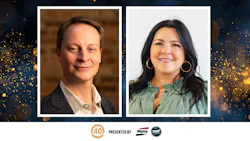
From 2008 to 2012, Dan Kaus held the title of workshops brand manager for BP Lubricants, a role in which he led marketing for the do-it-for-me side of BP’s business, including quick lubes.
As part of his job, Kaus was heavily involved in the launch of Castrol Premium Lube Express, BP’s first fully branded foray into the quick lube space. His work included conducting intensive training sessions for new operators.
“One of the questions we asked operators when they came to that training was what business are you in?” says Kaus, who also wrote a marketing-focused column for NOLN from 2008 to 2012. “Nine times out of 10, it was answered with ‘the oil change industry, lube shops…like, what are you talking about?’ And then we hit them with, ‘No, you’re in the customer service industry.’”
In some ways, the quick lube industry has evolved significantly over the ensuing two decades. Marketing has become a highly integrated discipline focused on brand reputation, customer experience, and digital engagement.
In other aspects, however, things have remained very consistent. Many of the challenges Kaus and his colleagues faced in the late 2000s—a difficult economy, rising oil prices, synthetic oil extending drain intervals—still ring true for quick lube brands today. And no matter how the message of quick lube marketers is delivered, its intent is unchanged: Let the guest know we’re here to serve.
Coupons and Car Counts
Jenn Bochnowski spent 16 years in automotive aftermarket branding, marketing, and guest experience. She entered the industry with Lube and Go, an independent El Paso, Texas, quick lube owned and operated by her husband, Mark, and his father, John. The business was sold to Oil Changers in 2021, at which time Bochnowski became the director of retail brand for Oil Changers Breeze Auto Care. In late 2025, Bochnowski stepped away and founded Deuce Identity, a boutique branding, marketing, and guest experience marketing firm.
Bochnowski also currently serves as vice president of the Preventative Automotive Maintenance Association and is PAMA’s marketing communications committee chair.
“I’ve been really fortunate to work through an interesting period of growth—everything from acquisitions and rebrands to new store development and launching entirely new concepts,” she says.
Along the way, Bochnowski says she has observed a notable shift in how quick lube brands have marketed themselves.
“When I started in the industry, marketing for quick lubes was more campaign-driven and maybe even a touch transactional,” Bochnowski says. ‘Like a lot of industries, let’s say two decades ago, most of their focus was on traditional media. The automotive aftermarket space was really couponing and driving immediate car count.”
Kaus, who now works in pharmaceutical marketing and strategy, recalls the work that went into the development of the Castrol-branded quick lube facilities and the marketing challenges that come with trying to carve out a place in a crowded industry. Kaus says what he and his colleagues discovered while conducting research was that there were significant gaps between what customers wanted from a quick lube and the experience they were receiving.
“Back then, CPLE was a big, big thing,” Kaus says. “And it was about helping the operators elevate their game; it wasn’t just a signage program like some places. This was all around helping them to grow their car counts, grow their ticket average, and, at the end of the day, make sure customers were delighted.”
As part of their training sessions, Kaus and company helped Castrol operators create their own websites during training using the company’s builder tool.
“That was light years ahead of many places, right?” Kaus says. “Your most advanced (shops) probably had a Facebook page. Groupon was a novel concept at the time. Everybody was doing the money mailer coupons. I think some people were still in the phone book.
“Things have moved more in the (digital) direction. It doesn’t matter what industry you’re part of at this point in time. Your social and digital presence is that much more important as a way to build trust, which is a really important thing when it comes to people dealing with what is their second most valuable asset. … Building that trust, I think digital is a great way to do that, but back then you didn’t have as much savviness for many quick lube owners.”
The Modern Marketer
In 2026, quick lube marketers have to take a more holistic approach to their work, Bochnowski says.
“You’re not just responsible for advertising,” she says. “You’re responsible for the brand’s reputation, the digital experience. What does the guest’s journey look like? How does a loyalty program work?”
Everything from online reviews and local engagement to internal communications and franchise and store alignment across a brand, as well as the guest experience play a role in quick lube marketing, Bochnowski says.
“In many ways, marketing has become much more operational,” she says. “If a guest has a poor experience, or your Google reviews aren’t healthy, or your website is frustrating, or the marketing messaging is disconnected from what the guest feels in the service bays, all of that’s marketing. So, it’s very much more integrated and cross-functional than maybe it was two decades ago.”
Part and parcel with that evolution of quick lube marketing has been the number of job titles that have proliferated over the past 20 years. Whereas a brand may have had a marketing director, an agency partner, and maybe some traditional advertising support in the past, the industry’s big players now have marketing specialties on their organizational charts that didn’t previously exist.
These titles can include: loyalty marketing specialists, digital reputation managers, social media managers, customer journey strategists, SEO managers, paid search experts, marketing automation specialists, and content creators. Brands with large franchise networks also have franchise marketing support roles that are focused on helping operators market locally while protecting overall brand consistency.
“Even guest experience roles have become, I think, much more prominent because brands recognize that retention matters just as much, if not more than customer acquisition,” Bochnowski says.
Bochnowski adds that she has observed the skill sets of quick lube marketers broadening, especially with regards to brand and guest experience strategy.
“Early in my career, industry marketing was viewed more as promotions and advertising, and today that entire experience is the brand, which I think is so important,” she says.
Timeless Tenets
Marketing platforms and job titles have evolved through the years, but today, both Kaus and Bochnowski agree that many of the fundamentals of good marketing for quick lube brands have remained consistent.
“The automotive aftermarket and quick lube space is still a people business,” Bochnowski says. “Guests want speed, they want to be able to trust you, and they want convenience and consistency.
“What I’ve always loved about the quick lube space is that it sits sort of at that intersection of convenience, trust, and hospitality. You’re asking people to trust you with something that’s really essential to their everyday life, and then to also trust you enough to keep coming back. As a marketer, you’re working to please the guest and to support—rather than get in the way of—the day-to-day operations team that works in the service space every day.”
To that end, Bochnowski says it has been critical for operations teams to work with integrity and sincerity to ensure that marketing messages align with those traits to reinforce good company values and convey that the brand is looking out for its guests rather than simply trying to sell to them.
In terms of how marketing tools and technologies have evolved over the years, Bochnowski says she has seen several categories flourish:
- Customer data and CRM platforms now allow marketers to better understand guest behavior, retention, and service cadence.
- Digital advertising and targeting now allow marketers to be more precise with geography, behavior, and intent in messaging. This has been especially useful in saturated markets where competition is fierce.
- Review and reputation platforms such as Google, meanwhile, have “dramatically influenced the way guests make decisions,” she says.
- Marketing automation tools help with sending personalized reminders, maintenance messaging, and retention campaigns at scale.
- Lastly, Bochnowski says AI and content tools are beginning to reshape speed and efficiency. But, she adds, the human side still matters.
“Technology can make marketing smarter,” Bochnowski says, “but the relationships are still what build that loyalty.”
Adds Kaus: “It’s not just about what you sell. It’s about who you serve and how many ways you can serve them. Those are the people that I think are winning across industries, quite frankly. Digital makes that easier to do, but that’s out-of-store (and a little bit of in-store). In the store, it’s all about nailing that experience, right? … Let’s treat people like people, and I think that will go a long way.”
***
The NOLN 40th Anniversary is presented by Mighty Auto Parts and Solid Start/True Brand.
About the Author
 Tom Valentino
Tom Valentino
Editor
Tom Valentino is the editor of National Oil and Lube News. A graduate of Ohio University, he has more than two decades of experience in newspapers, public relations and trade magazines, covering everything from high school sports to behavioral health care. Tom’s first vehicle was a 1990 Mazda 626, which he used to deliver pizzas in the summer after graduating high school. Today, he drives a 2019 Jeep Compass, which usually has a trunk full of his daughter’s sports gear. In his spare time, Tom is an avid Cleveland sports fan and a volunteer youth sports coach.
Don't miss Tom Valentino's next article. Sign up for NOLN's Quick Lube Report and This Month in NOLN newsletters.