Independent vs. Franchise: Choose Your Quick Lube Venture
Quick Takeaways
- Success in quick lube depends on aligning your business model with your goals, whether that’s independence for control or franchising for support and growth.
- Industry experts emphasize the importance of dedication, operational excellence, and customer focus regardless of the chosen path.
- Independent operators enjoy flexibility in management, employee benefits, and decision-making, but face challenges in vendor relations and scaling without corporate support.
- Franchise networks like Valvoline offer structured processes, brand recognition, and resources that facilitate rapid expansion and consistent customer experience.
- Careful planning and understanding your strengths will help determine whether an independent or franchise model best supports your long-term success.
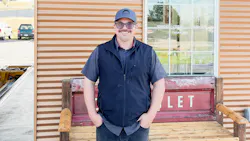
Anyone in the quick lube field knows that no one shop runs exactly like any else. Each part of the operation is the product of a certain management style, but the question for you as an operator is what works best for your goals?
This is the crux of the decision between whether to operate your business as an independent or to join a franchisee network. Both paths see great success in quick lube, each with its own benefits and challenges.
To gain a deeper insight into the key differences between independent and franchise operations, NOLN recently spoke with a successful independent operator and an executive from Valvoline—one of the largest quick lube chains in the country.
Independent-Minded
Before opening Polson Lube Center in Polson, Montana, Nick Baughman worked at a tire shop. It was his first role out of high school, and he would stay there for 12 years, building up experience as a technician. However, as time went by, Baughman began to realize there was a specific niche in the area not being filled: There were no quick lubes.
In 2018, Baughman made the leap: a building was constructed in the rural Montana town of Polson for a new business, becoming the closest and most convenient option for drivers from multiple surrounding communities who already had to travel into town for basic services.
“There’s a lot of people that will drive an hour, hour and a half, to come to town just to do their errands, do their laundry. We’ve got the only Walmart within I think an 80-mile radius,” explains Baughman. “So, we do have a lot of people that actually come from out of our area to get this service because we’re essentially the closest place.”
For Baughman, having spent time working in a corporate environment, he knew the best choice for him was to operate independently. Not only did he want to be his own boss, but he wanted to have a face-to-face relationship with his employees.
“When it's go time, I'm out there with them, and they see that,” says Baughman. “You're not just sitting behind a desk somewhere, which I think speaks volumes.”
Operating as an independent gives Baughman freedom in how he accommodates his employees as well. He has control over factors such as compensation, and is able to include his staff in decision-making processes. Baughman currently offers benefits to his employees, and is looking to expand his offerings to include retirement plans and other benefits soon.
“I feel like I can do a better job taking care of my employees and my customers, and at the end of the day, those guys are the reason we have jobs,” says Baughman. “If it wasn't for my employees and my customers, we wouldn't be able to operate.”
With no boss above him in the business, Baughman lets his decisions be guided by no one else but his customers and employees. Having the freedom to make decisions is important for Baughman—however, it does mean that all the weight of each decision comes down on him, not having a team helping navigate it. It can be more difficult to navigate topics like human resources and vendor management when it’s just you and a small team, meaning it takes extra time and dedication to ensure it runs correctly.
“There is a lot more involved with being independent. Your vendors and insurance is a big thing,” tells Baughman. “A lot of times, with franchises, they’ll have people to handle that for you. Whereas at this level, you’re overseeing that from start to finish.”
Franchise-Focused
Being able to offer resources is where franchise networks truly shine. Valvoline Instant Oil Change, one of the largest quick lube chains in the U.S., has resources in place for its franchisees such as the SuperPro process. Created alongside its franchise partners, it serves as a clear operating playbook, covering everything from employee training to customer service.
“That combination of operational excellence and a trusted brand has helped Valvoline deliver best-in-class same-store sales growth for 19 consecutive years,” says Adam Worsham, Valvoline Inc.’s chief franchising officer.
It’s essential for a company overseeing such a vast network of shops across the entire U.S. The company has many franchisees, several of whom operate a huge number of stores alone. One of Valvoline’s franchisees, Velocity Auto Care, recently reached a milestone of 50 Valvoline Instant Oil Change service centers with the launch of a new store in Edinburg, Texas, just this past August. It was the 12th location that’s opened since Velocity Auto Care acquired 38 Valvoline Instant Oil Change franchise locations from Valvoline in December 2024.
The acquisition also included a development agreement to open an additional 75 service centers over seven years, supporting long-term expansion throughout Texas.
“Our development pipeline reflects the significant opportunity we see across our territory,” said Robert Fish, CEO of Velocity Auto Care. “We're building strategically in high-growth communities and remain on track to add an average of nine to 12 new locations annually as we continue working toward our long-term goal.”
This growth is not unique to Velocity Auto Care, as Valvoline has been recognized throughout the industry for its rapid expansion throughout different markets, including Entrepreneur naming Valvoline Inc. among its Fastest-Growing Franchises rankings this year. It marked the second consecutive year the brand has been recognized, rising to No. 21, up from No. 41 in 2025, and securing the top position in its category on this year’s list.
Not just anyone can become part of Valvoline’s franchise network. Prior to joining, the company takes time to ensure there is a culture fit, and that the store aligns its operations to the company’s standards. That includes a store’s training, systems, integration into Valvoline’s supply chain, and more.
“We have a people-first focus and want operators who understand that this is fundamentally about people from the team to our guests,” Worsham adds.
Valvoline maintains 80% repeat customers and a 100% franchise renewal rate, and credits that to consistency throughout its entire network of shops. The company looks for operators who are actively involved in the shop, and in tune with its operations.
“If the model were not creating value, franchisees would not stay in the network—or continue investing capital for growth—year after year, and in many cases, for decades,” explains Worsham. “Our success depends on sophisticated, well-capitalized franchise partners who are actively involved in their businesses. We are not looking for passive owners; we want operators who are committed to the business, their teams, and the guest experience.”
Ultimately, whether a shop decides to operate independently or as part of a franchise network will depend on the best fit for that business. While some operators, like Baughman, prefer having flexible options for how to operate, other stores thrive better with the backing of a nationwide chain.
At the end of the day, what’s most important is a dedication to helping your customers and your staff. With planning, research, and consideration, you will also be able to settle on which direction is best for your own shop.
“If you’re willing to put in the work and put in the time, it will pay off,” says Baughman.
About the Author
 Kacey Frederick
Kacey Frederick
Assistant Editor
Kacey Frederick joined as the assistant editor of NOLN in 2023 after graduating from the University of Arkansas at Fort Smith with a bachelor’s in English and a minor in philosophy. The grandchild of a former motorcycle repair shop owner, he’s undergone many trials and tribulations with vehicles. Now the proud owner of a reliable 2011 Toyota Camry, he works to represent those in the service industry that keep him and so many others safely rolling on.