Quick Takeaways
- Stephen Spinelli transitioned from a football player with no automotive experience to a key figure in the growth of Jiffy Lube.
- Spinelli and his former football coach and teammates identified market demand by comparing vehicle populations, leading to rapid expansion plans for hundreds of locations.
- Securing support from major oil companies like Pennzoil was crucial in scaling the business and unlocking capital for growth.
- Spinelli's dedication to education led him to earn an MBA and a doctorate, eventually becoming president of Babson College.
- He emphasizes that modern quick lube businesses have evolved significantly, focusing on efficiency, innovation, and expanded services.
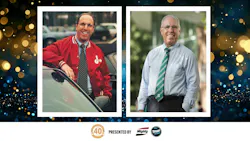
In his own words, Stephen Spinelli “barely knew how to drive a car” when he received a call from Jim Hindman his former football coach at Western Maryland College (now McDaniel College) about an automotive aftermarket business opportunity in the late 1970s.
Although semi-retired, Hindman was working in the nursing home industry when he approached Spinelli with an idea.
“I’d never been west of Philadelphia before. He sent me to Clinton, Iowa, to run a retirement village,” Spinelli recalls. “I had no idea what I was doing, but I worked hard. And then after a couple of years, he got three or four of us (former football players) together and said, ‘There’s this cool thing out in Ogden, Utah.’ Go take a look, and let’s see if we can buy it.”
That “cool thing” in a town 10 miles east of the Great Salt Lake turned out to be a business that would launch an entire new segment in the automotive aftermarket service sector that now thrives more than four decades later.
The Next Big Thing
Hindman was a driven entrepreneur, Spinelli says.
“He couldn’t help himself,” Spinelli says of his former coach. “He was thinking all the time. He was seeing stuff that nobody else saw. He had all kinds of businesses, so he was always attuned."
An oil embargo and spiking gas prices in the late 1970s convinced Hindman to seek opportunities to get into the energy business. Hindman sent his brother-in-law to Utah to investigate a solar farm. By happenstance, Hindman’s brother-in-law discovered a completely different opportunity once he arrived in Utah: Jiffy Lube, a local fast oil change business.
“He said, ‘You won’t believe this place. Cars are lined up to get their oil changed,’” Spinelli says. “It really was a phenomenon.”
Spinelli cobbled together funds with contributions from family and friends to claim a minority stake in the Hindman-led purchase of Jiffy Lube Inc. and its handful of locations in Utah.
“Here’s how sophisticated we were,” Spinelli says. “We said there’s a lot of cars lined up in Ogden, Utah, to change oil. How many cars are there in Ogden, Utah, compared to Boston, Massachusetts? Oh, there’s more cars in Boston. Wow, maybe we could do more business in Boston. That was our deeply sophisticated analysis of the market. But it was a great lesson for me. If you have market demand, you could figure the rest out. If nobody wants what you’re doing—it could be the coolest thing in the world—but if they don’t want it, forget it.”
Hindman, along with Spinelli and his other former players, began hammering out a business plan, assessing the size of the market, the number of vehicles on the road, and how often those vehicles needed an oil change. They then began to calculate what they could charge for service, how many vehicles they could service, and what was needed to adequately serve the market.
Within three or four days, Spinelli says, the team believed it could reach 1,000 locations within 10 years.
Spinelli moved to Ogden looking to learn the oil change business from the ground up.
“I was a strong, young football player, just getting off the team,” he says. “I remember getting in the bay because I said I’m going to learn how to do this. I’m going to be the best lube tech ever.
“But I didn’t have a clue. The first car I worked on, I couldn’t get the plug out. And this little kid who looked like he was about 5-foot-2 came over and said ‘right tighty, lefty loosey.’ I flipped the thing over and opened it up. That’s how little I understood about the business. But we learned it.”
Hindman and his former players had lofty aspirations for their new venture from the start. Shortly after acquiring Jiffy Lube Inc., they changed the business’ name to Jiffy Lube International.
"It more an attitude than a reality, but that was the attitude,” Spinelli says. “We’re going to grow this. If this is the big idea we think it is, then it needs to get scaled. So, we went into it immediately thinking we’ve got to open units.”
With big ambitions, Spinelli says it was critical to earn the trust of the existing staff. Spinelli recognized that being young, having no prior automotive experience, and being from the East Coast were hurdles to winning his staff over. But he was committed to succeeding, working upwards of 90 hours per week, including nights and weekends, absorbing as much knowledge as he could along the way.
The Key to Growth
One of the biggest challenges to their expansion plan was getting buy-in from property owners where they sought to build stores. Without a deep war chest of funds to work from, most new stores in the company’s early days were built on leased properties.
“(Property owners would say,) ‘Wait a minute. You want me to lease you property to change oil? You’re going to build a special building and dig this hole in the ground, and you’re going to drop hazardous waste? Where does it go?’” Spinelli says. “It was more that you had to convince the real estate world that this was a viable operation to get it to grow than it was to get the consumer.”
Hindman, Spinelli, and their colleagues achieved a major breakthrough during a meeting with Pennzoil.
“We went to Pennzoil and said there’s two things we’ll do: One, we’re going to have 3,000-gallon tanks, so you can bring a tanker over and drop in 3,000 gallons of oil at a time. If we even came close to our plan, their sales would just explode, and they would go from No. 2 to Quaker State to No. 1.
“I mean, we went to Quaker State, too. We went to everybody. We said, the major motor oil companies … whoever backs us is going to win big.”
Spinelli admits it was a brash pitch.
“Now, it was a little bit arrogant,” he says. “There’s, you know, the football coach and his young players going in and saying, ‘We’re going to change you, Mr. Pennzoil, Mr. Quaker State.”
Hindman, Spinelli, and company got a meeting with Pennzoil executives in the elusive top floor of the company’s Houston headquarters to make their case.
“Once we could convince them that the system was really sound and could be scaled, there really was at least 1,000 stores to be built, and they could really get a foothold on market share,” Spinelli says. “One Jiffy Lube was like a whole territory worth of cans of oil. So, it changed their economics, and they supported us in a big way with all kinds of sophisticated debt and subordinated debt to build buildings.
“That unlocked it. Once we got it unlocked it and started to grow and started to show multiple stores in multiple markets making money, the whole capital structure started changing. People started coming to invest in real estate, more franchisees, bigger money came in to buy territories. It all unlocked, and I think it was a deal with Pennzoil that unlocked this.”
The Next Chapter
Sometime after reaching the 1,000-store milestone, Hindman, Spinelli, and their colleagues sold off Jiffy Lube. Spinelli remained on the company’s board of directors, kept his stock, and became a franchisee. Spinelli says he struggled to scale his franchise operation and decided he would benefit from more education. He enrolled in weekly night classes at Babson College in Wellesley, Massachusetts, to pursue an MBA for seven years.
“I’d go to class Thursday night, and Friday morning, I was a terror in the stores,” he says. “We’re going to do this. We’re going to change this. We’re going to grow this way. I really tried to take Thursday night into action on Friday morning. And then I built up questions. The professors, I think, hated me. I did more time in their office than I did in the classroom.”
As he peppered his professors with questions about how he could improve his Jiffy Lube operations, Spinelli discovered a love for education. After earning his MBA, he continued his education and earned a doctorate.
“What do you do with a doctorate?” Spinelli asks. “You become a teacher.”
Spinelli went on to spend 14 years as a member of the faculty of Babson, as vice provost for entrepreneurship and global management, and director for the Arthur M. Blank Center for Entrepreneurship. In 2007, Spinelli became president of Philadelphia University. In July 2019, Spinelli was appointed as the 14th president of Babson.
In June, the college announced that Spinelli will retire at the end of the 2026-27 academic year. In the meantime, though, Spinelli says he hasn’t stopped learning.
“You learn more from the students than you teach the students,” he says. “If you’re a good teacher, you’re pulling all this wisdom out. And I’ve got to tell you, the students today are so good and so driven. … They’re just so bright, and they work so hard. I have to tell them to take a break. That environment for me was just super exciting.”
Spinelli has maintained ownership of a small piece of real estate, and he still loves the quick lube business. He says he sees it as an example of constantly learning and evolving.
“If you look at what they do today, it’s almost a completely different business,” he says. “There are still fundamental business practices of efficiency, scale, branding, and pricing philosophy that are pretty consistent over time. But the services and nature of market demand and pricing has evolved dramatically. They’re doing probably three or four times—maybe more—the revenue that we did in the best of times because they’re doing so many more services.
“They took quick lube and made it quick service. There’s an innovative system now that gets a lot of service done. That optimizes the real estate, gives you more leverage on that, and gives you more share of the automobile wallet. They’ve done, I think, a fabulous job.”
***
The NOLN 40th Anniversary is presented by Mighty Auto Parts and Solid Start/True Brand.
About the Author
 Tom Valentino
Tom Valentino
Editor
Tom Valentino is the editor of National Oil and Lube News. A graduate of Ohio University, he has more than two decades of experience in newspapers, public relations and trade magazines, covering everything from high school sports to behavioral health care. Tom’s first vehicle was a 1990 Mazda 626, which he used to deliver pizzas in the summer after graduating high school. Today, he drives a 2019 Jeep Compass, which usually has a trunk full of his daughter’s sports gear. In his spare time, Tom is an avid Cleveland sports fan and a volunteer youth sports coach.
Don't miss Tom Valentino's next article. Sign up for NOLN's Quick Lube Report and This Month in NOLN newsletters.