Perfect Your Preventative Maintenance Schedules
Quick Takeaways
- OEM schedules often focus on warranty periods and may not account for severe driving conditions or long-term vehicle health.
- Analyzing failure data and fluid degradation can help shops set more accurate maintenance intervals, such as 30,000-mile ATF changes instead of OEM recommendations.
- Regularly reviewing component lifespan data, like thermostats and hoses, enables shops to recommend proactive replacements before failures occur.
- Effective communication with customers involves sharing real-world evidence and patterns rather than fear-based tactics, building trust and encouraging timely maintenance.
- Developing a customized maintenance framework based on shop data and manufacturer insights can improve vehicle performance, safety, and customer satisfaction.
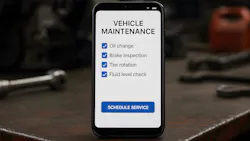
Maintenance schedules can be difficult for vehicle owners to navigate. While most drivers assume the OEM schedule is best, independent shops and service providers try to explain why more frequent service can be better. What’s crucial is helping the customer understand that—as well as having your own data on hand to back up your claims.
Dave Schedin owned his own auto shops from 1997 through 2006, and now works as an auto repair shop success coach with CompuTrek Systems, helping shops across the country and in Canada with improving their own processes. In a conversation with NOLN, he lays out the best practice for shops to develop their own tried-and-true maintenance schedules, and how to make it a framework for future clients to benefit from.
Understanding Where OEM Schedules Fall Short
The important thing to remember about manufacturer maintenance schedules is that they typically focus on getting the vehicle through its warranty—not total lifetime—and this can be used as a way to make cars cheap to maintain on paper, but far more complex in practice.
While OEMs often split maintenance plans between “severe” and “normal” driving, much of what customers see as normal driving conditions are actually putting a lot of strain on the vehicle. This can include stop‑and‑go driving, short trips, and climate extremes.
When Schedin operated his own shop, he conducted his own test on OEM transmission intervals. He pulled factory-fill synthetic ATF samples from three vehicles—Ford, Dodge, and GM models—at roughly 25,000 to 27,000 miles, and sent them for independent lab analysis. The results showed the additive packages were already 60% to 75% depleted, even though the manufacturers were calling for first changes at around 60,000 miles.
The data affirmed the standard in Schedin’s shop of 30,000-mile ATF exchanges (and 15,000 miles in severe service) to avoid running what he calls “broken fluid” for tens of thousands of miles before the OEM’s first recommended service.
Preventative maintenance schedules also have to take more than mileage into account, which Schedin has seen increasingly downplayed by OEMs. Fluids degrade with time, not just use. Many fluids in sealed bottles have a shelf life of only three to five years before they start to separate and break down.
Components beyond fluids can be impacted by this, too—under-hood rubber belts and hoses typically have a seven- to eight-year lifespan, which can be largely independent of mileage. Additionally, OEMs haven’t fully validated the long‑term impact of gasoline direct injection, higher compression, blow‑by, and intake deposits on sensors and fuel trims. This can mean more frequent, real‑world maintenance rather than just trusting unvalidated OEM intervals to help avoid issues down the line.
“Most shops are reactionary preventative maintenance, which means, ‘Oh, we’ll replace that part when it fails, because we don’t know when it’s going to fail,’” says Schedin. “Shops should pull their last 50 thermostats and look. I did this in two or three shops: Their average thermostat life was seven to 10 years old. At about the 80,000-mile range, it would go bad.”

Data Is Your Best Friend
Shops that take note of the “what,” “when,” and “why” behind components failing can start to notice patterns like average thermostat lifespans to build their own maintenance recommendations with. For every failure that a customer experiences, ask as a team: “What could have been done 12, 24, 36, or 48 months ago that would have prevented this?” This way of thinking helps build an understanding of the typical age at failure, typical mileage at failure, common driver habits, and what maintenance could help prevent it from happening again.
As outlined previously, pulling the last 50 recorded failures for a part type—thermostats, hoses, water pumps, certain transmissions—can be eye-opening. Take note of the details in each case: vehicle make/model/engine, age and mileage at failure, and maintenance history. Determine the average lifespan for that component and use that to help guide what you recommend to customers going forward.
There are also sources other than OEMs that can help guide you. Fluid manufacturers’ recommendations can be a great second opinion, often suggesting shorter intervals than OEMs and potentially even providing lab data on fluid breakdown and additive life. Compare that with what you’ve seen in your own failures and adjust your shop schedule accordingly.
Communicate Findings Effectively with Your Customers
Finally, make sure your entire shop is on the same page, and that your staff knows how to communicate the need for more frequent service without it veering into overselling. Advisors and techs should know the OEM schedule, but should position it as the minimum—and be ready to recommend more frequent or earlier services based on real‑world evidence.
It’s important to note that staff should always avoid using fear-based tactics to sell maintenance to customers. Instead, rely on the facts: tell them the state of their car, and explain why your shop recommends having a certain component replaced. Use real examples and patterns, such as “we see X failures when people wait,” instead of “this could blow any second” language. That builds long-term trust and makes customers more open to frequent maintenance.
Maintenance schedules can be more complex than many think. With many customers assuming OEM schedules are always to be followed, these simple, effective strategies can be used to form your own reliable maintenance suggestions that help your customers build trust and drive safer.
“Most shops really love their customers—and when they can come from a place of principled testimony, most customers are going to be educated and buy into that,” tells Schedin.
About the Author
 Kacey Frederick
Kacey Frederick
Assistant Editor
Kacey Frederick joined as the assistant editor of NOLN in 2023 after graduating from the University of Arkansas at Fort Smith with a bachelor’s in English and a minor in philosophy. The grandchild of a former motorcycle repair shop owner, he’s undergone many trials and tribulations with vehicles. Now the proud owner of a reliable 2011 Toyota Camry, he works to represent those in the service industry that keep him and so many others safely rolling on.