iFLEX at AAPEX | As Quick Lube Industry Diversifies, PAMA’s Strategic Plan Evolves
Key Highlights
Produced with support from PAMA.
This show takeover was sponsored by our iFLEX at AAPEX coverage partner, The Preventive Automotive Maintenance Association.
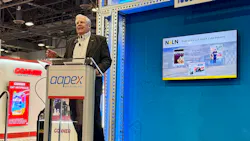
Findings presented during the State of the Industry session at iFLEX at AAPEX show that operators in the quick lube sector are diversifying their businesses. In turn, the Preventative Automotive Maintenance Association is adopting a strategy that reflects the broader automotive service industry.
The State of the Industry, presented by NOLN publisher Greg Smith, highlighted a far more diverse sector has become over the last 20 years, as operators embrace services such as tires and repairs. Much of the presentation centered around data from the 2026 NOLN Operator Survey, which noted that 34% of responding operators said they also have car washes.
Ahead of iFLEX, Jason Lyon, immediate past president of PAMA and chief operating officer for Benny’s Car Wash, spoke with NOLN about key findings in the report and how PAMA is working to meet its members' changing needs.
“It seems that the industry, we’re all just evolving right now, and it’s great to see the adaptability of our industry, and the adaptability of the operators to meet shifting consumer demands and consumer needs,” Lyon said. “That was really notable to me. I was raised in the Larry Dahl school of thought where less is more and to just be very effective at the eight or 10 things you do instead of trying to be everything to everybody and letting them down all over the place.
“For PAMA, that helps us to see how we need to be approaching that. Our members are diversifying, so we have to take steps to help meet those members’ needs. Otherwise, they don’t get the representation and support from their trade association that they need.”
Earlier this year, PAMA leaders gathered in Austin, Texas, for a two-day strategic planning session that sketched out the association’s roadmap for the next five to 10 years. Among the takeaways from the meeting, Lyon told NOLN, was that PAMA’s interests include strengthening its working relationships with other trade associations, including AMRA, MIMA, AAPEX, and the Auto Care Association.
“We want to create better interconnectedness so that we are familiar with all of the issues that our members are dealing with,” Lyon said. “And if we can't help them directly, we have a contact at this association who's way more versed in this area that would be able to help you out.”
PAMA is also looking at ways to raise brand awareness for the association, said Lyon, who acknowledged that the rollout of its 2023 rebrand from the Automotive Oil Change Association to the current PAMA name led to some confusion within the industry. The name change reflected the increasing diversification being seen across the industry, Lyon said.
“Our name (needed) to evolve because almost half (our members) aren’t simply quick lube,” he said.
This includes embracing both independent operators and franchisees for national chains alike, Lyon said. “We want to do a better job of connecting to franchisees and making them feel a part of the association and letting them know they have a direct line to us as well,” he said.
Oil Supply Cost Challenges
Looking at the industry, Lyon said maintaining oil supplies is the top challenge facing quick lube operators today.
“And we’re seeing a unique dynamic happen in the oil business and the cost of oil,” Lyon said. “For the first time I can remember, unbranded oil is more expensive or equal to the cost of branded oil. Everybody is going up. It’s just that some went further than others.”
As for why the cost of unbranded oil is, in some cases, matching or exceeding branded oil, Lyon explained: “A lot of the major manufacturers, they also, in the course of manufacturing to the end consumer motor oil, they're creating base stock. And that base stock they use to meet internal demand, but then they also sell on a secondary, more like spot market.
“And so that's where a lot of smaller, unbranded manufacturers will purchase on the spot market instead of through contracts over a long period of time. And as that supply internally for these large manufacturers became tight, that caused them to really raise the base oil and additive package products that they were selling to unbranded manufacturers. When production can't keep up with demand, that goes up. We just don't see that a lot.”
About the Author
 Tom Valentino
Editor
Tom Valentino is the editor of National Oil and Lube News. A graduate of Ohio University, he has more than two decades of experience in newspapers, public relations and trade magazines, covering everything from high school sports to behavioral health care. Tom’s first vehicle was a 1990 Mazda 626, which he used to deliver pizzas in the summer after graduating high school. Today, he drives a 2019 Jeep Compass, which usually has a trunk full of his daughter’s sports gear. In his spare time, Tom is an avid Cleveland sports fan and a volunteer youth sports coach.
Don't miss Tom Valentino's next article. Sign up for NOLN's Quick Lube Report and This Month in NOLN newsletters.