Quick Lube Q&A: Joe and Melissa Canfield
Quick Takeaways
- Joe and Melissa Canfield chose a franchise partner that could provide the infrastructure and tools to support multi-location growth.
- They say finding the right location—and understanding the needs of its community—is one of the hardest parts of opening a store.
- Local chambers, schools and community organizations help the couple build meaningful connections in the areas they serve.
- Regular visits and shared chat channels help them support their teams across multiple stores without micromanaging.
- Their advice to expanding operators: Hire strong managers and make sure each store can run without you.
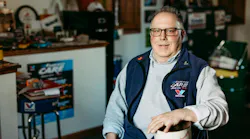
Joe and Melissa Canfield operate four Grease Monkey stores in the Tampa Bay, Florida, region, with a fifth expected to open by mid-December. All this growth has happened in just the past four years, and it was made possible due to careful planning, and the support of a robust franchisee network.
While the two former owners of an independent repair shop planned to pursue multi-location quick lube ownership from the start, it wasn’t easy. They walk through what the process looked like for them, and how they’ve made such rapid expansion a success.
NOLN: Thanks so much for speaking with us. With your team fixing to move on to a fifth location already, could you share how you first decided it was time to transition from being a single shop to operating multiple stores?
Melissa Canfield: Before Grease Monkey, we were a single independent shop. We had our standalone auto shop for 17 years, and then my husband and I “retired”—but we decided about a year later that we weren't quite ready to retire.
We looked around at different franchises, and one of the decisions that we had made going into it was that since we had already done the “one and done,” we wanted to do multiple. We wanted to partner with a franchise that could help us with that path; we had wanted to franchise our first store, but just were not able to do it. So, when we partnered with Grease Monkey as a franchisee, they really helped us get the infrastructure that we needed in order to multiply.
I will say, having operated both a single store and multiple locations, it is not for the faint of heart. The amount of growth that we have experienced—five stores in four years—is a lot. But we didn’t make that decision lightly. We knew that Grease Monkey offered, like I said, the infrastructure, and also the tools that we need to give our customers choices when they are looking for either repairs or maintenance. It's just wrapping your brain around the fact that you're helping your customer, which is always paramount to us.
NOLN: Walk through the steps you’ve gone through in getting a new store ready. Picking a facility, putting management in place. How have you tackled the process?
Joe Canfield: Our second and third locations were acquisition locations. So, it was a little easier because they had staffing in place. As far as the new location goes, we had staff come in with us well in advance, so they were completely trained. When we opened the doors, it was a seamless transition.
As far as identifying a location, that's probably the hardest part of the whole thing, is finding a spot that's going to be beneficial for us and for the community around it.
Melissa: We're always looking at how we can benefit the community around us. We want to be part of the community, not just come in and take over an area—we want to be an integral part.
It goes back to that old adage of “see a need, fill a need.” That's what we want to do. We want to be able to see a need in a community, and fill that need for them—whether it's in the stay in the car, convenient oil change place, or if it's in the full-service automotive repair. We want to be able to partner with our community so that we can be there to help when they need it.
NOLN: Your shop has done a lot of community work. What kind of impact has that had? How do you recommend shops maintain a connection with the communities they operate in?
Melissa: I think one of the best ways to start is by joining your local chambers. We have very strong community chambers in our area, and they can help plug you into the different events that are going on.
I just stepped out of a meeting for a local parade that I'm helping put on, and I'm part of a huge committee, but I'm doing my little part to help support this event. And that way I get to meet lots of different people, business owners and vehicle owners alike.
Don’t just join the chamber and get the plaque, but actually get involved in those chambers. Go to the networking, committees, ambassador groups, everything that a chamber has to offer, and that can kind of point you in the direction of what you feel passionate about.
For us, it's definitely the high schoolers and young entrepreneurs that are wanting to get into the automotive industry. I'm on an education committee where we partner with local schools, which is how I found out about the Future Career Academy. Our kids grew up in the YMCA, so we like to partner with them as well. We just did a trunk or treat with our local YMCA.
NOLN: How do you divide yourself between multiple stores as an operator?
Joe: The bulk of my time is spent in our main store in Ruskin because that's where I have the most office space. The other stores are primarily quick lube only, and they have a competent manager in place. So, my presence isn't necessary all the time.
From a support standpoint, it is important to show that you're there on a regular basis. We get there, we get our hands dirty with them every so often—we’re available, but not overbearing. You definitely don't need to micromanage when you have good people working for you.
Melissa: We also use Google Chat. We actually had something come in this morning. One of the stores said, “Hey, I saw this coupon. It didn't look familiar.” All the stores could quickly see what was happening. We're obviously on that chat as well, and we were able to easily communicate, “Everyone needs to be on the lookout for this—this is something not official and not from us or from corporate.”
NOLN: Thanks again for taking the time to chat. Before we wrap up, do you have any final advice for other quick lube operators looking to expand someday?
Melissa: The biggest thing that I've learned is to make sure the distance between stores is not too far. Location, location, location—it's important. As well as just learning about that community that you're putting the store in.
Joe: If you're going to get a second location, you need to position yourself more as an owner and not an operator. Meaning, you can't be an employee in that store and run a second store at the same time.
You need to have managers for both stores, and you need to work on the business. You can't really be working in the business, or it's going to be less effective. You have to get to the point where your shops run without you there. They need to be able to run it when you're out there focusing on marketing, at another location, or whatever the case may be.
About the Author
 Kacey Frederick
Assistant Editor
Kacey Frederick joined as the assistant editor of NOLN in 2023 after graduating from the University of Arkansas at Fort Smith with a bachelor’s in English and a minor in philosophy. The grandchild of a former motorcycle repair shop owner, he’s undergone many trials and tribulations with vehicles. Now the proud owner of a reliable 2011 Toyota Camry, he works to represent those in the service industry that keep him and so many others safely rolling on.
Related
 qa_hempy_gilfillan