Quick Takeaways
- Industry growth has been driven by increased consumer awareness, technological advancements, and the demand for premium vehicle protection products.
- Vendors have played a crucial role in supporting quick lube operators through product innovation, technical support, and tailored solutions to meet evolving market needs.
- Filtration technology has advanced significantly, with a focus on efficiency, flow rate, and dirt-holding capacity to meet modern engine demands.
- Shop equipment innovations include the development of catwalk systems, electric oil evacuation units, and integrated computer stations to streamline operations.
- Additive products have evolved to address challenges posed by new engine technologies like fuel injection and GDI, improving deposit control and engine performance.
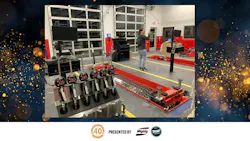
Over the past 40 years, the evolution of the quick lube industry hasn’t been confined strictly to the service centers themselves.
From the equipment used in shops to the products installed in customers’ vehicles, advancements in key segments across the market have transformed vehicle maintenance and service operations.
As part of our publication’s 40th anniversary series, NOLN recently caught up with representatives from several vendors that serve the quick lube industry to reflect on how their respective segments have grown alongside the quick lube businesses they serve.
Filters
Anan Bishara says the filtration industry in general “was totally in a different place” when he launched Premium Guard in 1996.
“An oil change was typically (done after) just 3,000 miles. The prevalent oil was conventional oil; 10W-40 was the most popular oil. Most customers were diligently changing the oil and replacing filters every 3,000 miles,” he says. “Engines were mechanically much simpler. Filtration technology…saw very little change for many years, so the market was stagnant with limited choices and basic technology…(and was) dominated by a handful of fully established national brands. Private labels hardly existed.”
With the development of new engines with more diverse filtration needs, Bishara says he saw an opportunity to transform private labels and filtration into a premium business model “built on engineering, innovation, quality, customer service, and long-term partnership.”
“This is a foundational aspect of our industry,” Bishara says. “As the vehicle population became more diverse, customers often had to source filters from multiple suppliers because no single company could offer complete coverage at that time.”
Bishara says he and PGI leaders spent significant time speaking with operators and technicians to understand their pain points with regard to filters. Many expressed a need for more economy-line oil filter options, a sentiment that helped drive PGI’s model of offering good, better, and best product lines.
In the 30 years since the launch of PGI, Bishara says oil, engine, cabin, fuel, and transmission filters have changed materially in different ways. In the mid-1990s, for example, oil filters were primarily cellulose-based media designed to last 3,000 miles. With extended oil change intervals and the emergence of lower-weight oils, oil filters are now being viewed through the prism of three criteria, says Bishara.
“We're looking at what is the filtration efficiency needed, what is the flow rate that is needed for that filter, and what is basically the dirt-holding capacity and the life of the filter,” he says. “The agent in the filters becomes extremely important nowadays, especially with the introduction of turbo engine, a much higher precision engineering, as well as a much higher flow rate.”
These innovations have necessitated rigorous testing and validation processes for filter manufacturers, Bishara says.
Meanwhile, engine air filters were an often-overlooked product category for years, drawing little attention from installers and operators, says Bishara.
“Air filters, actually, in protecting the engine, will have an even more important role than oil filters, because that's the first line of defense for the engine,” he says. “And when we do research on an aging engine, one of the key factors that affect the performance of the engine and deteriorate not just the air flow of the air filters, but also the amount of dust, especially fine dust that when you go into the engine, translate into silica. That silica is the most damaging to the cylinders and the piston, and that's where the engine really started deteriorating. So, having the right media that gives you the right flow and the right filtration efficiency is extremely, extremely important.”

“Having the right media that gives you the right flow and the right filtration efficiency is extremely, extremely important.”
PGI CEO Anan Bishara
Bishara describes cabin air filters as “one of the more exciting” categories in filtration, noting that a decade ago, just 50% of new cars sold in the U.S. had them pre-installed, compared to about 96% today. Bishara attributes much of the growth in the cabin air filter space to consumer and technician awareness, as well as improved ease of replacement. The COVID-19 pandemic also drove demand for premium cabin air filters, as customers became more conscious of air quality in their vehicles.
“Also, the evolution of activated charcoal, that's another exciting factor where
that plays a key role,” Bishara says. “Now just we commonly think of activated charcoal to eliminate bad odors in the vehicles, but it's way beyond that because activated charcoal absorbs basically harmful gases, carbon monoxide, sulfur dioxide, a lot of the pollutants when we get stuck in traffic and make a big difference.”
Bishara adds that customers’ desire for premium filters drives better margins for operators as well. “Now you can get a ticket of $150 or $160 if you’re able to offer (these products),” he says. “It’s not just good for the operator. It’s good for the vehicle. You’re maintaining the vehicles, protecting the engine, and protecting passengers and drivers. It’s good for everybody to have the right product and right assortment in your store.”
Shop Equipment
Based in Oklahoma City, Oklahoma, Devon Industries has manufactured equipment used by quick lube facilities since it was founded in 1988. David Parton, director of operations, came to Devon about seven years ago, marking his first foray into the automotive aftermarket industry. Sean Robertson, director of shared services, joined Devon about 4 ½ years ago after working in industrial pump sales for the prior 12 years.
A common theme in the discussions Parton and Robertson have held with quick lube operators has been long-standing challenges with having to source equipment from different vendors.
On the quick lube equipment front, Parton and Robertson point to the development of catwalk systems in the 1990s, with Devon among the first manufacturers to bring the systems to market.
“We brought out the actual catwalk system that is a raised platform for the worker to get on to be able to get underneath the car and reach the car,” Parton says. “(The platform) has a lot of stuff on it—our oil filter trays, tool trays, a bin to roll underneath the car to catch the oil. Everything’s right there at your hands.”
Over the years, Devon’s catwalk systems have been adapted to accommodate the shop layouts of different quick lube brands.
Oil evacuation machines have been another significant equipment-related development for quick lube operators. Devon manufactures single- and dual-bay static units, as well as a portable option. Parton notes that by evolving from pneumatic units to electric, quick lube technicians can speed up the process of drawing out oil.
Parton and Robertson pointed to several other recent equipment advancements of note, including gliding pit covers, as well as computer stations, which can now hold multiple monitors and tablets used in modern technological systems.
Additives
Bruce Dobbs and his partner, Gilead Stallard, had long been in the wholesale automotive parts industry when they launched Run-Rite, a supplier of automotive maintenance products and equipment to the professionally installed automotive service marketplace, in 1993.
“Fuel injection was really starting to become the primary system in engine design at that time," Dobbs says. “There were a lot of problems initially. We saw that in some of the things we were selling in automotive distribution. We saw the chemical side starting to go, and I started looking at part numbers and proliferation, those things. Quick lubes were just beginning. We started to see, hey, that could be an opportunity to create a business that could address the needs of a growing category and handle some of the issues they would face, too.”
Quick lube operators at the time were hungry for sales and training support, Dobbs says.
“Many of those guys came from other industries,” he says. “They were new to automotive, but they were open to ideas and profit opportunities, where some of the old-school, dyed-in-the-wool automotive shops were resistant to anything new. It was refreshing to work with businesses that appreciated your support.”
With a base of operators eager to learn, Run-Rite developed a safety, technical, and sales program that mixed technical information with guidance on presenting information to customers and opportunities for additional profit centers, including additives.
As part of its efforts to help simplify maintenance tasks, Run-Rite developed a three-step fuel system treatment that became an instant hit, Dobbs says.
“It was amazing how well accepted it was and how well the stores did in promoting and selling it,” he says. “We listened, and that was the key. ‘We don’t like doing this. Our guys can’t understand that, or they’ll lose this or that. What can you do that’s a little bit different?’ We learned a long time ago it’s better to listen to the people who are in it every day. If we can develop and address some things for them, it will really build confidence in them, and that confidence led to an increase in sales.”
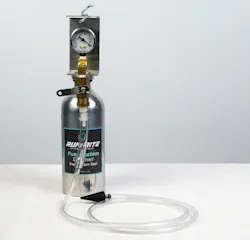
During his 33 years at the helm of Run-Rite, Dobbs says the chemistry involved with automotive additive products has evolved out of necessity. The advent of fuel injection brought challenges, as gasoline lacked the right detergents, leading to significant deposit problems. Older fuel additives weren’t thermally stable and could produce additional deposits.
Run-Rite has also been conscious of stores’ environmental and health concerns as it develops its additive product lines.
“The chemistry has definitely had to be upgraded because (there have been so many) technological advances,” Dobbs says. “(Gasoline direct injection) is a huge issue. I say GDI stands for ‘Great Day In our industry’ because without maintenance, these cars are just eating oil and ending up with severe deposit-related problems. So, it’s been good for us to be able to promote some products that solve some of those issues and create customer satisfaction.”
***
The NOLN 40th Anniversary is presented by Mighty Auto Parts and Solid Start/True Brand.
About the Author
 Tom Valentino
Tom Valentino
Editor
Tom Valentino is the editor of National Oil and Lube News. A graduate of Ohio University, he has more than two decades of experience in newspapers, public relations and trade magazines, covering everything from high school sports to behavioral health care. Tom’s first vehicle was a 1990 Mazda 626, which he used to deliver pizzas in the summer after graduating high school. Today, he drives a 2019 Jeep Compass, which usually has a trunk full of his daughter’s sports gear. In his spare time, Tom is an avid Cleveland sports fan and a volunteer youth sports coach.
Don't miss Tom Valentino's next article. Sign up for NOLN's Quick Lube Report and This Month in NOLN newsletters.